A beautiful planner can look full of possibility on the day you buy it. The harder question comes a week later: can you still use it after a busy day, an interruption, or a change of plans?
That is the question I like to bring to everyday organization. A system should have room for ordinary life, including the days that do not go according to plan.
Consider the familiar pile near the door. It might contain mail, a library book, and the thing you promised to return to a friend. Before designing an elaborate sorting system, ask what you need that spot to do. Perhaps the first useful change is simply a clearly marked place for things leaving the house.
The same approach can apply to a task list. “Sort out the office” leaves a great deal to interpret. “Put the unopened mail in the tray” gives you a place to begin and a point at which to stop.
This is an invitation to experiment with smaller steps. Try one change, notice whether it fits your routine, and adjust it if it creates more work than it saves. You do not owe a complicated system your loyalty just because you spent time setting it up.
A missed day also does not need a complicated recovery plan. Leave yourself an obvious next step so you can return without first reconstructing everything you meant to do.
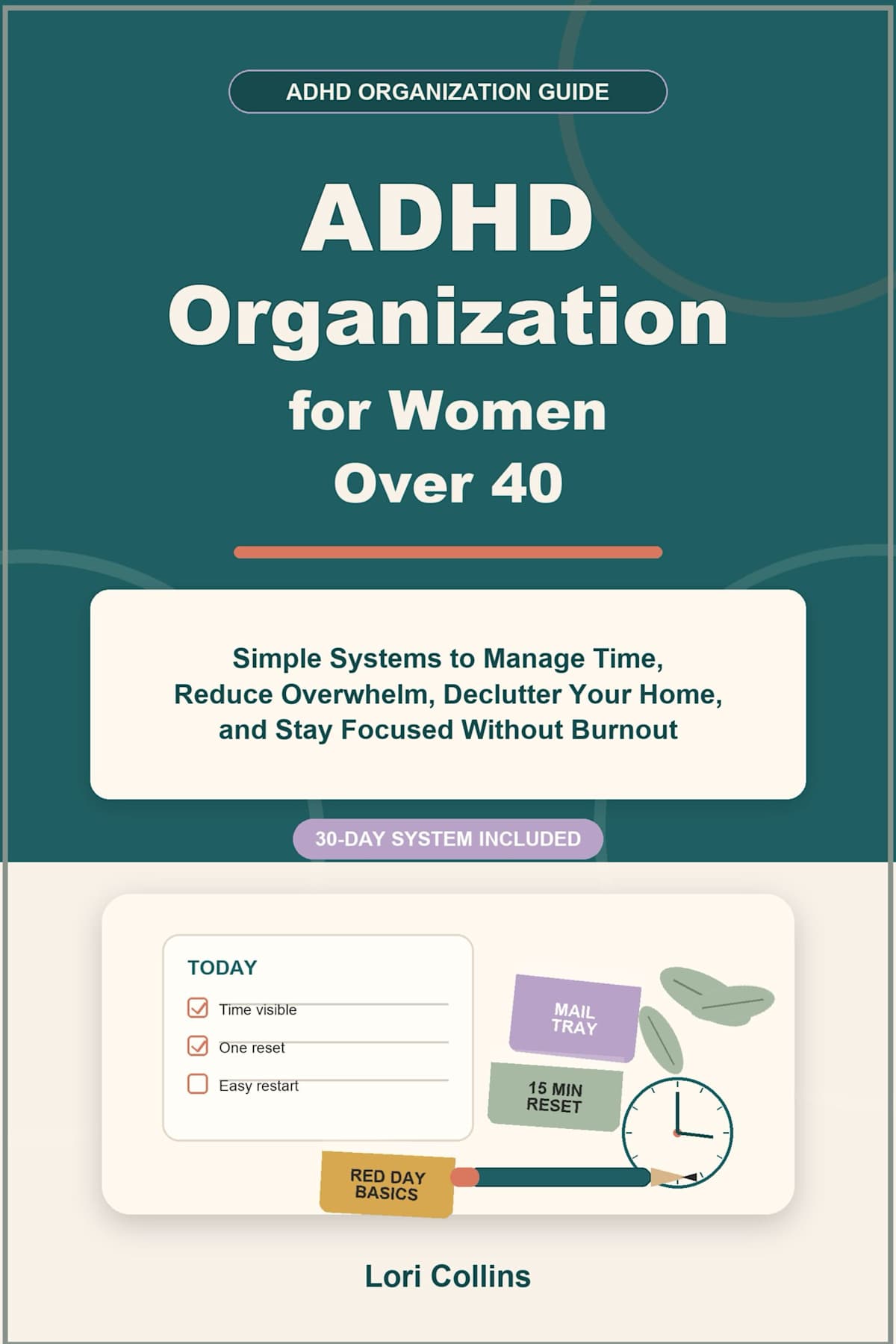
ADHD Organization for Women Over 40 explores everyday systems for time, home, and focus. You can find it in my book catalog.
What would make your own routine easier to return to: fewer steps, a more visible reminder, or a smaller definition of finished?